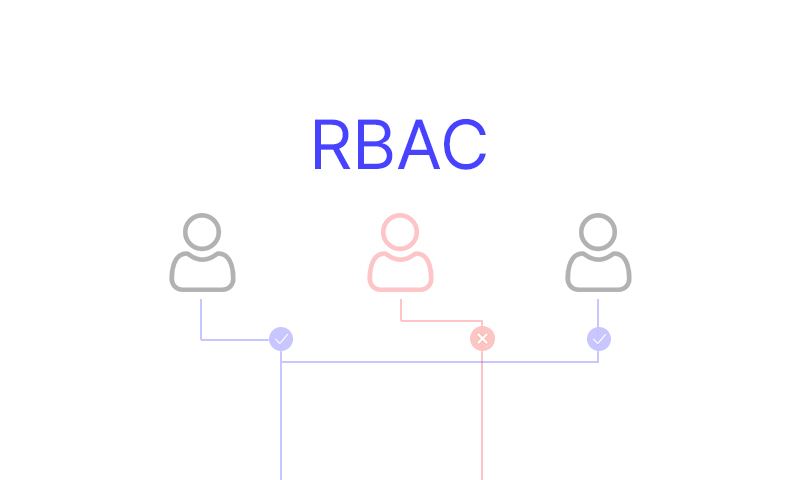
While working on ERP systems, I used to think like this:
"This user can approve invoices."
It sounds normal.
It sounds practical.
But architecturally — it’s wrong.
When I slowed down and started understanding RBAC fundamentals properly, especially after reading the NIST RBAC Reference Model, I realized something important:
Power should never belong to a person.
Power must belong to a title.
That single shift changed how I look at access control design. To really internalize this, I rebuilt the idea using a Kingdom analogy. In my Kingdom model:
- 👤 Citizen → User
- 🎖 Title → Role
- ⚔ Power → Permission
A citizen is just a human.
Authority exists only because of the title they hold.
If someone is a Tax Collector, they can collect taxes.
If they lose that title, they lose that power.
The power was never theirs. It belonged to the title.
Giving Power Directly to a Citizen [Wrong way]
This is how many beginner systems are accidentally designed:
<?php

$citizen = [
    "name" => "Arjun",
    "powers" => ["collect_tax", "view_treasury"]
];

function can($citizen, $power) {
    return in_array($power, $citizen["powers"]);
}

if (can($citizen, "collect_tax")) {
    echo "Tax collected.";
}
At first glance, this works.But structurally, this breaks the core RBAC principle defined in the NIST model:
Permissions are assigned to roles.
Users are assigned to roles.
Not:
Permissions are assigned to users.
If we keep attaching powers directly to citizens:
- Power becomes scattered.
- Governance becomes difficult.
- Auditing becomes messy.
- Authority becomes personality-driven instead of structure-driven.
This is not a Kingdom. This is uncontrolled power distribution.
Power Lives Inside Titles [Right way]
Now let’s implement it properly — the way RBAC is meant to be structured. Instead of giving powers to citizens,we give them titles.
And titles contain powers.
<?php

$citizen = [
    "name" => "katappa",
    "titles" => ["royal_guard"]
];

$titles = [
    "tax_collector" => [
        "collect_tax",
        "view_treasury"
    ],
    "royal_guard" => [
        "protect_castle",
        "carry_weapon"
    ]
];
Notice the difference:
The citizen has no direct powers.
The title holds the powers.
This mirrors what I learned from studying the NIST RBAC structure:
User → Role → Permission
In my analogy:
Citizen → Title → Power
Checking Authority the Right Way
Now we don’t check: Citizen → Power
We check: Citizen → Titles → Powers
<?php

function can($citizen, $titles, $requiredPower) {
    foreach ($citizen["titles"] as $title) {
        if (in_array($requiredPower, $titles[$title] ?? [])) {
            return true;
        }
    }
    return false;
}

if (can($citizen, $titles, "royal_guard")) {
    echo "Jagte Raho";
}
Now power flows through structure. This is no longer a shortcut. This is modeled authority.
Why This Changes Everything
Imagine tomorrow the Kingdom decides:
Tax Collectors should no longer view the treasury.
In the wrong design, we would need to edit every citizen. In this design, we update only the title:
<?php

$titles["tax_collector"] = ["collect_tax"];
All citizens holding that title automatically follow the new law.That’s governance.That’s structured authority.And that’s the first fundamental lesson I learned from properly studying RBAC instead of just using it.
Comments
4